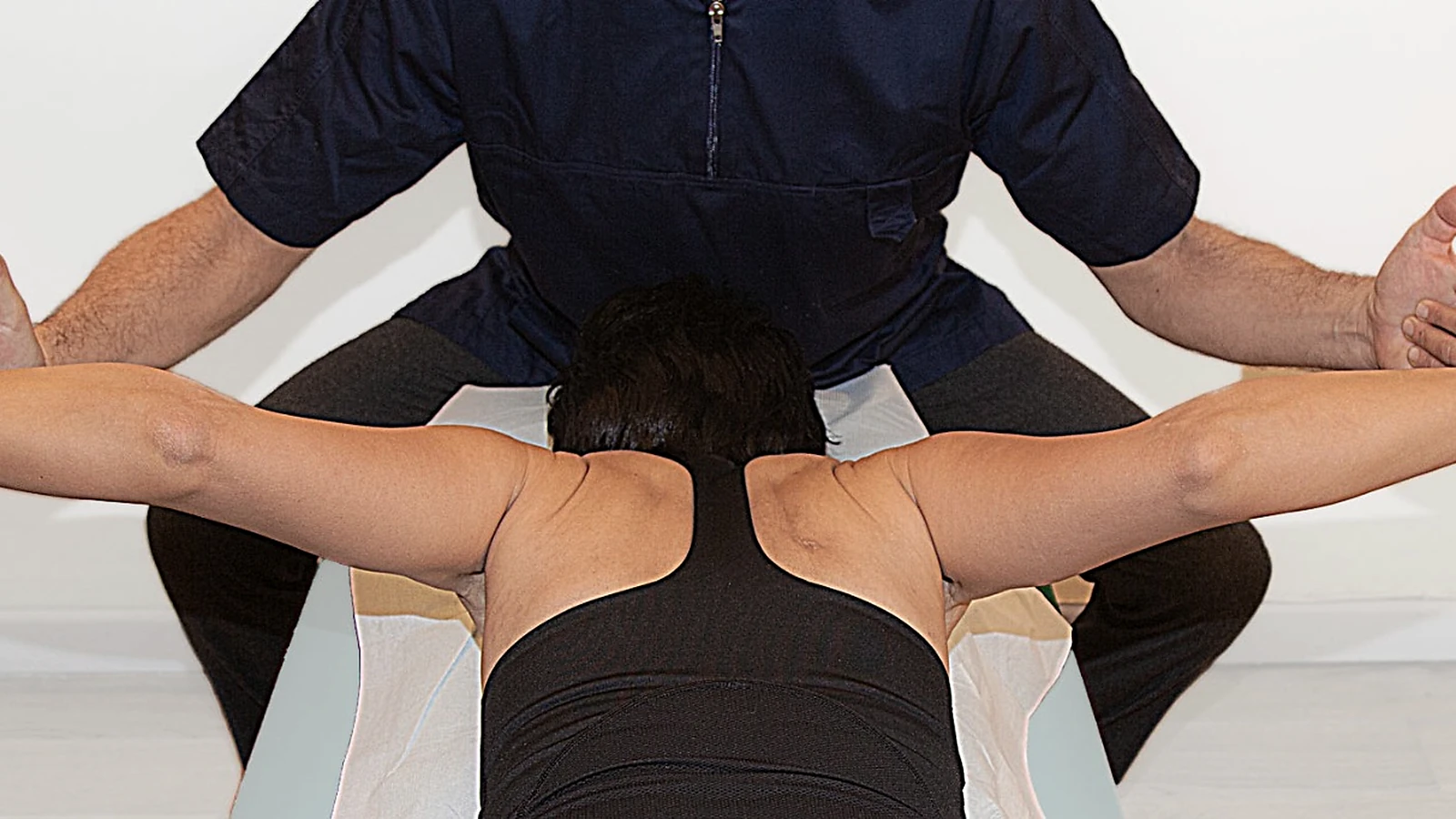
You are not your scan
A disc herniation, protrusion, osteoarthritis or degeneration can provide important information,
but an image alone cannot tell us how you move, what you are able to do or what changes your pain.
Learn more +
Diagnostic investigations are part of the clinical picture, but assessment also considers function,
movement, activity and the individual response.
The painful area is not always the whole story
Every movement involves different parts of the body working together.
For this reason, we look not only at where you feel pain, but also at how movement is organised.
Learn more +
Even a simple movement may involve the pelvis, hips, trunk, knees, ankles and other regions working in coordination.
How many movement options does your body still have?
There is not necessarily one single correct way to move.
We are interested in understanding which strategies you use and which alternatives remain available
when load, fatigue or activity change.
Learn more +
Having different strategies available may help the body adapt movement to the demands of the task
and to changing conditions.
You are more than muscles and joints
Balance, sensory information, the nervous system, experience and context all contribute to movement.
A strategy that initially developed to protect you may, over time, become the only one you use.
Learn more +
Movement is continuously adapted according to available information, the environment, fatigue,
the task and the perception of safety.