BACK PAIN · aNETomy®
Why does
your back hurt?
We are used to looking for the cause of back pain in the spine itself. But the place where pain is felt does not necessarily coincide with where the problem originated.
THE MAST METAPHOR
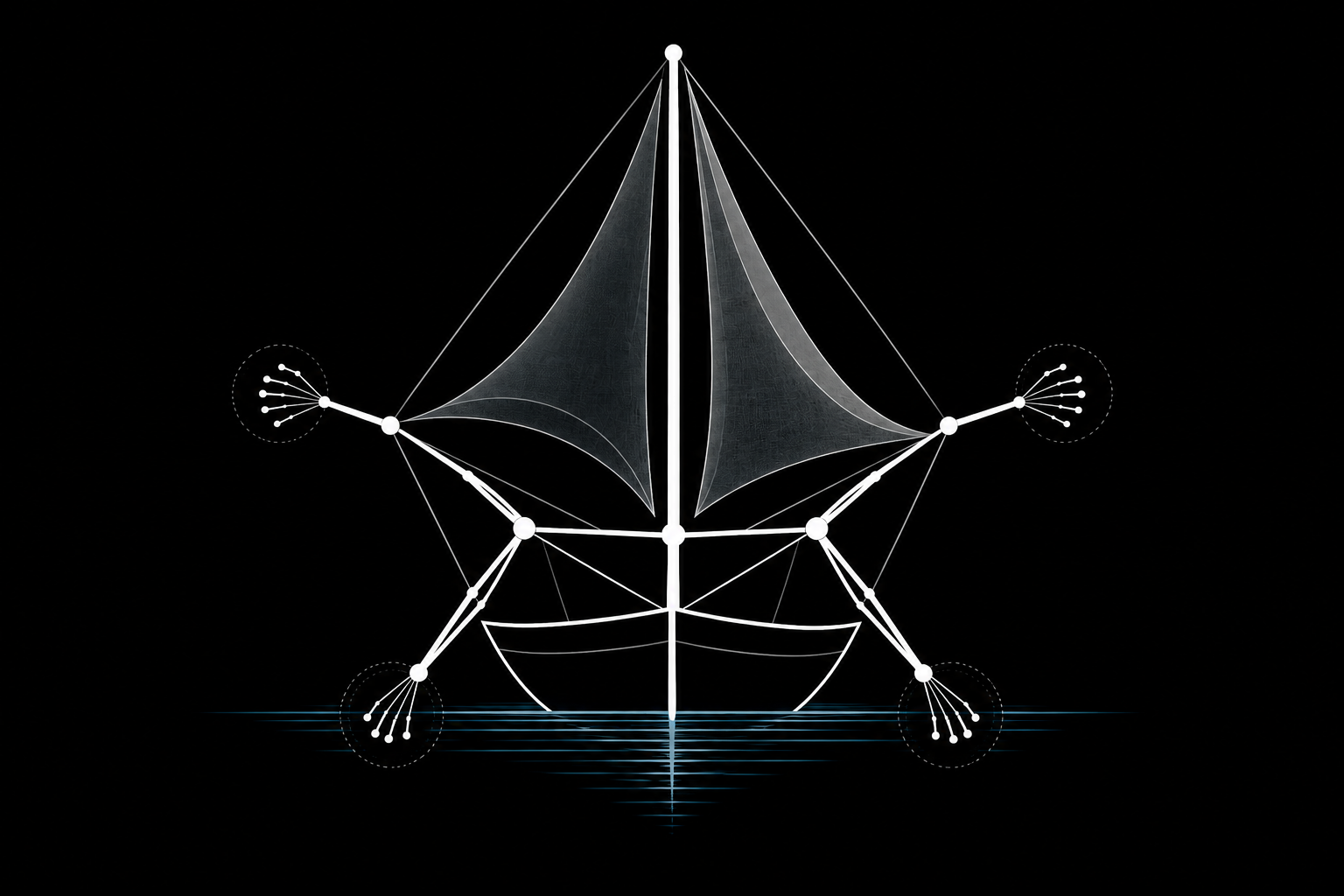
The spine as the mast of a sailing boat.
We can imagine the spine as the mast of a sailing boat: a central structure that receives, through shrouds and stays, the forces coming from the sails and the rest of the vessel.
In the body, forces generated by support, grip and limb movement are transmitted through joints, muscles and connective tissues towards the central regions. As these demands increase, the central axis must provide greater stability.
This stability is necessary, but when it becomes persistent it may reduce movement availability and contribute to a sense of stiffness.
FROM THE ENVIRONMENT TOWARDS THE CENTRE
To understand the back, we also look further away.
Hands and feet are important points of contact with the environment. Through the limbs, forces related to support, grip, movement and gravity are transferred towards the centre of the body.
The periphery
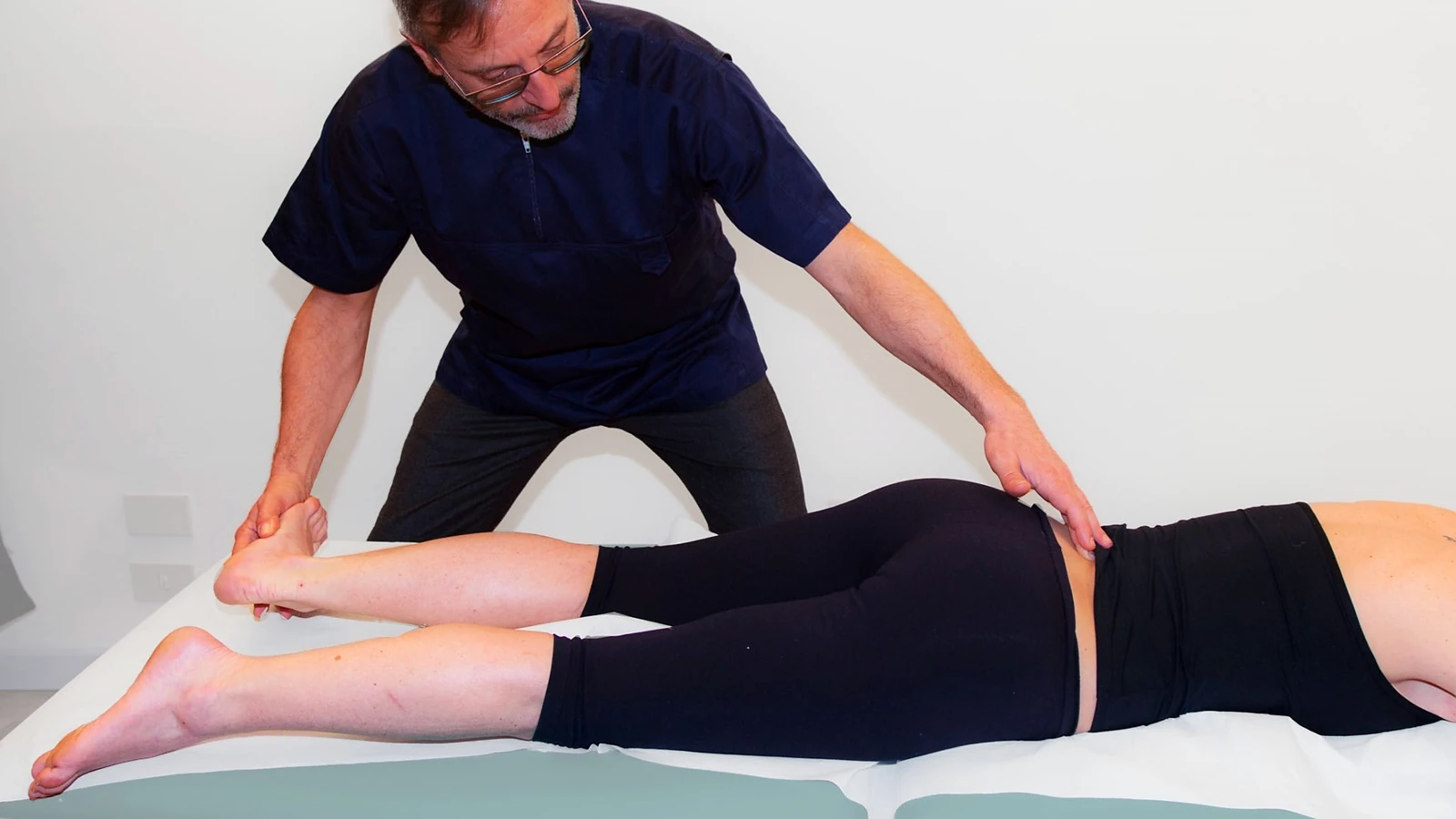
An aNETomy/KNT assessment may therefore begin apparently far from the painful area. We observe how the feet, hands and limbs connect with the rest of the system and how the knees, hips, elbows and girdles transfer forces towards the central axis.
When the knees and elbows tend to remain flexed, part of the musculoskeletal system's ability to organise support against gravity may be reduced, increasing the demands placed on the central regions.
An axis that also protects
The spinal cord is protected within the vertebral column. The brain and spinal cord are surrounded by the meninges, with the dura mater forming their outermost meningeal covering.
The spine is therefore not simply a mechanical structure. Pain, movement and protective responses emerge from the interaction of biomechanical, sensory and neural components.
In the aNETomy model, we also consider these relationships to understand why a region may become persistently stiff, sensitive or painful, without attributing the problem to a single structure.
THE KNT APPROACH
This is why we do not necessarily start with the back.
In KNT treatment, we do not start from the assumption that a vertebra needs to be “put back into place”. We try to understand which relationships are increasing the demands placed on the central axis.
Treatment may therefore involve the extremities, limbs and other body regions before addressing the spine directly. The aim is to modify the distribution of forces and observe how the system responds, reassessing movement.